


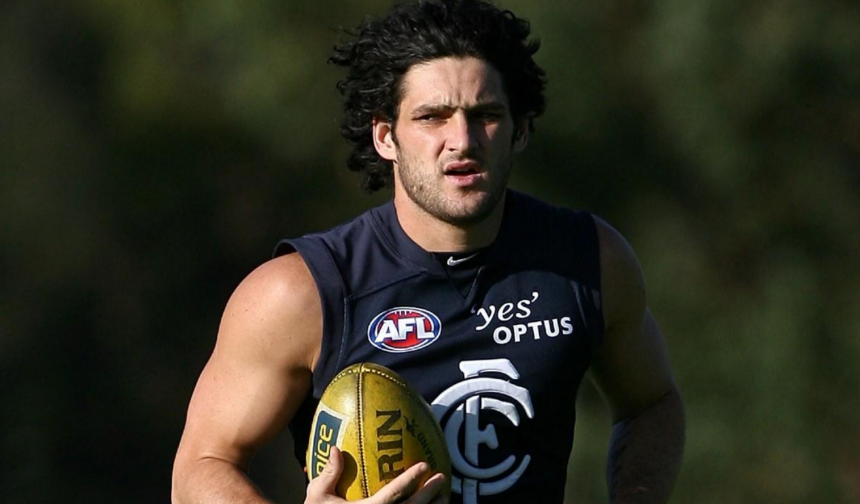
Brendan Fevola is a former professional Australian rules football player who became one of the most recognizable sporting personalities in Australia before successfully transitioning into a career in broadcasting and entertainment. Known for his exceptional goal-scoring ability, charismatic personality, and openness about personal challenges, Fevola remains an influential figure in Australian sport and media.
Born in Melbourne, Victoria, in 1981, Fevola developed a passion for Australian rules football from an early age. His athletic ability quickly attracted attention, leading to opportunities within elite junior competitions before eventually reaching the Australian Football League (AFL), the country’s highest level of professional Australian rules football.
Fevola spent much of his playing career with the Carlton Football Club, where he established himself as one of the league’s most dangerous and consistent forwards. His ability to score goals from difficult positions, combined with his physical strength and competitive instincts, made him one of the AFL’s leading attacking players during his era.
Throughout his football career, Fevola earned multiple individual honors recognizing his outstanding performances. His goal-scoring achievements placed him among the league’s elite forwards, and he regularly ranked among the AFL’s highest-scoring players during several seasons.
Supporters admired not only his sporting ability but also his energetic personality. On the field, Fevola combined technical skill with confidence, creativity, and an entertaining style that attracted large crowds and extensive media coverage. His celebrations and interactions with supporters often became memorable moments within Australian football.
Like many elite athletes, however, Fevola also faced significant personal and professional challenges. Media attention surrounding aspects of his private life sometimes overshadowed his sporting achievements. These experiences highlighted the pressures associated with professional sport, celebrity culture, and constant public scrutiny.
Following his retirement from professional football, Fevola successfully transitioned into broadcasting, radio, and television. Many former athletes struggle to establish careers after retirement, but Fevola’s communication skills, humor, and natural charisma allowed him to remain highly visible within Australian media.
His radio career introduced him to new audiences beyond traditional sports fans. Programs featuring entertainment, interviews, humor, and everyday discussions demonstrated his versatility as a broadcaster. His willingness to discuss personal experiences openly also contributed to his popularity.
Mental health awareness became an increasingly important theme throughout Fevola’s public life. By speaking honestly about personal difficulties, he helped encourage broader public conversations surrounding emotional well-being, addiction, resilience, and recovery. Many supporters praised his openness as contributing to reduced stigma surrounding mental health discussions.
Australian rules football occupies a unique position within Australia’s sporting culture, particularly in Victoria. Former players often remain influential public figures long after retirement, and Fevola’s continued presence in media reflects this enduring connection between sport and public life.
Entertainment television also became part of his post-football career. Participation in various programs allowed audiences to see different aspects of his personality beyond professional sport, reinforcing his image as both an athlete and entertainer.
Fevola’s career illustrates the increasingly common path followed by high-profile athletes who transition into media after retirement. Strong communication skills, public recognition, and audience engagement often create opportunities in broadcasting, commentary, and entertainment.
His sporting achievements remain an important part of his legacy. Goal-scoring records, memorable performances, and contributions to Australian rules football continue to be recognized by supporters and commentators who followed his playing career.
At the same time, Fevola’s story demonstrates that public careers often involve both success and adversity. His willingness to rebuild professionally following difficult periods has become an important aspect of his public image and has resonated with many Australians.
Today, Brendan Fevola continues to be recognized as one of Australia’s most familiar sporting personalities. Whether remembered for his outstanding performances on the football field or appreciated for his broadcasting career and advocacy for mental health awareness, he remains an influential figure within Australian sport and media.